Music Label OS
Built a 0→1 SaaS platform for independent music teams to organize catalog data and make pre-release decisions using structured workflows, collaboration, and AI-assisted analysis.

My Contributions
- Defined product strategy and catalog-first system architecture
- Designed end-to-end workflows for tracks, artists, and projects
- Shaped pre-release decision-support features around analysis and collaboration
- Built and shipped the MVP under real-world constraints
- Worked directly with musicians to validate assumptions and refine workflows
Challenge
Running projects through an independent music label showed me how quickly music operations become fragmented.
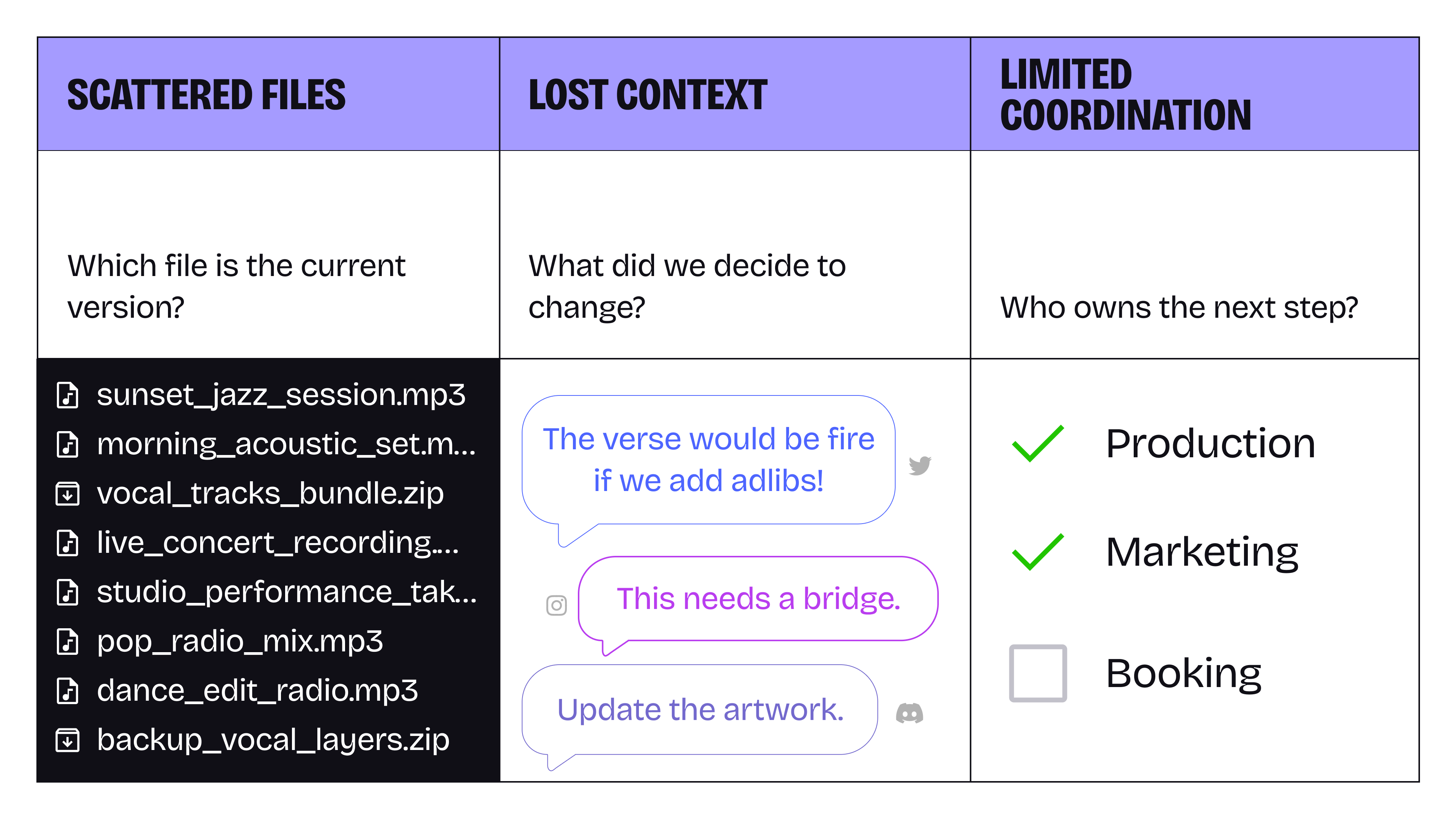
Audio files lived across storage services and local machines. Feedback was scattered through messages. Credits, artwork, release plans, and collaborator responsibilities were tracked separately or held in someone’s memory.
Three questions kept returning:
- Which file is the current version?
- What did we decide to change?
- Who owns the next step?
Files, decisions, and responsibilities were distributed across tools and individual team members.
This was not simply a file-storage problem. The larger issue was keeping the work, its context, and the people responsible for it connected.
Testing the model in Notion
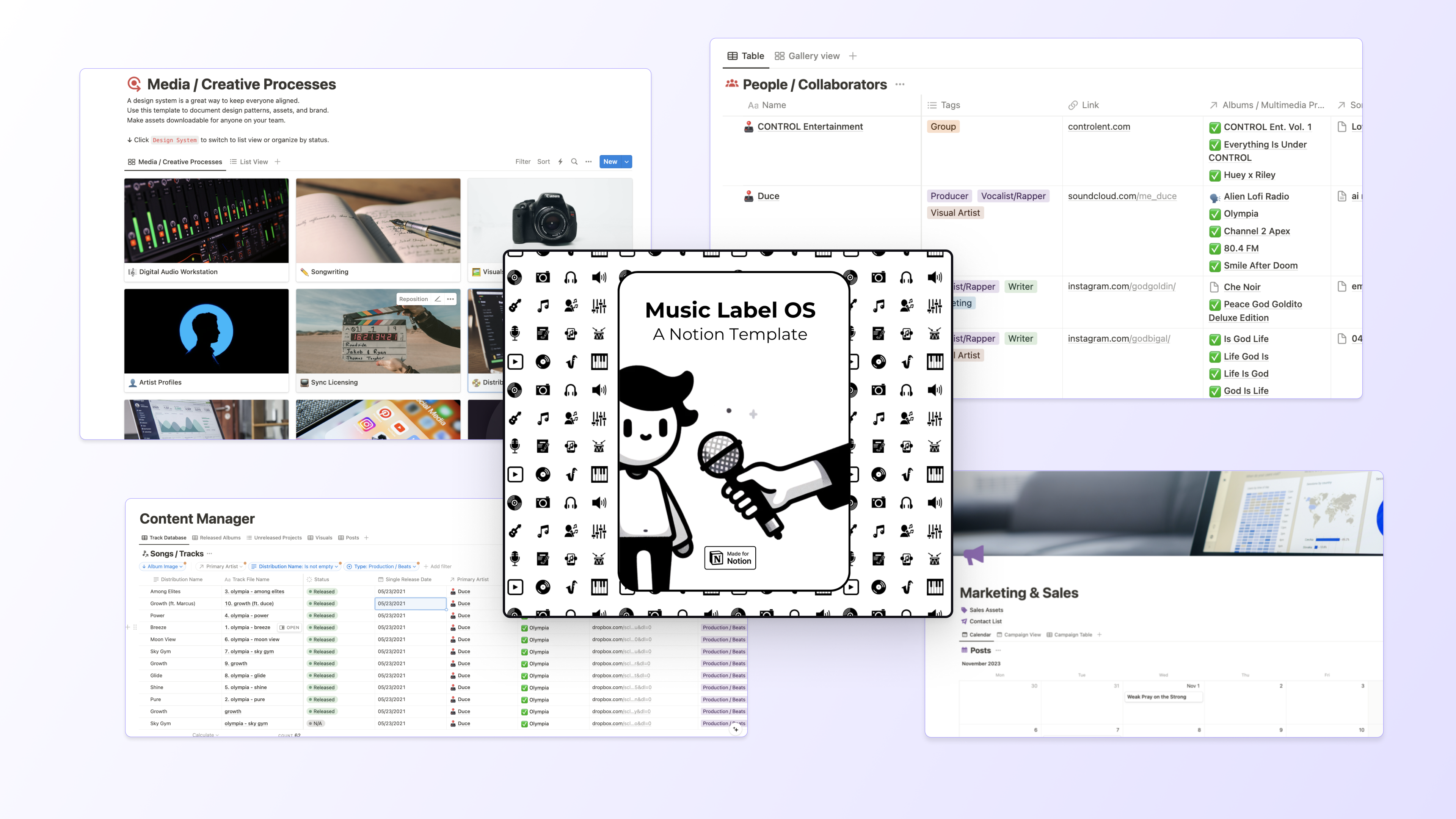
I began organizing CONTROL’s recurring label work in Notion in 2022. The workspace connected creative processes, collaborators, catalog information, and marketing activity.
By 2023, the system had become structured enough to package for other independent teams.
The first version connected several areas of label operations through a reusable Notion workspace.
The first copy sold for $10 on December 10, 2023. I raised the price. Sales continued.
It was a small but useful signal: someone outside CONTROL was willing to pay for the operating model.
The template revealed a larger system
As the Notion workspace developed, artists, projects, and tracks became more than separate lists. They formed a connected catalog that could support outside data and automated enrichment.
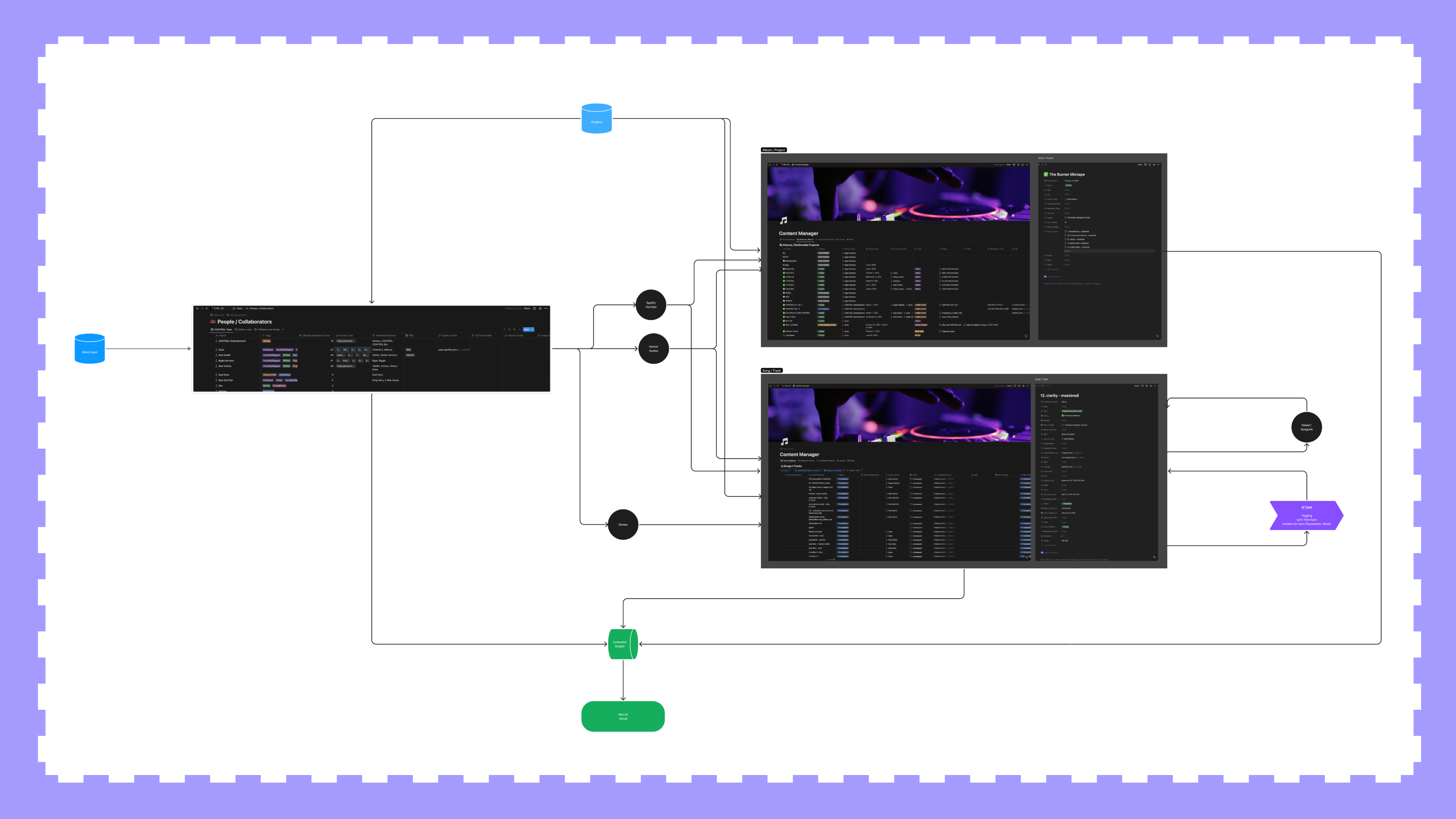
I explored using artist profile links as external identity anchors. These links could help locate related catalog data from music services, while Music Label OS operations could process original audio files, extract metadata, and return AI-assisted analysis to the working record.
An early model connected the working catalog with external identity sources, audio processing, and AI-assisted enrichment.
The model helped establish an important distinction: external services could enrich the catalog, but Music Label OS still needed its own internal records for artists, projects, tracks, and files. A streaming profile could help identify an artist without becoming the product’s source of truth.
It also exposed the limits of the template. Notion could test the relationships, but dependable identity matching, audio processing, team permissions, and automated enrichment required purpose-built software.
Moving from template to SaaS
In 2025, I began turning the model into a standalone multi-tenant product.
The new system needed to:
- maintain relationships among artists, albums, tracks, files, and credits
- separate each label’s catalog and team access
- connect external music data to internal records
- process original audio files
- attach analysis, tasks, and discussions to the correct work
The challenge was no longer how to organize more information. It was how to build a dependable catalog that could support collaboration and decision-making before release.
From storing tracks to coordinating work
The earliest SaaS interface reproduced many of the records from the Notion system, but the experience still felt like a set of adjacent sections.
As the product evolved, the track page became a shared workspace connecting metadata, audio versions, lyrics, files, analysis, tasks, and discussions.
The track experience evolved from a basic record into a workspace for coordinating the work around it.
The core workflow became:
- Add or import a track.
- Connect its audio and metadata.
- Review analysis or project context.
- Discuss the work and identify the next action.
- Move the track or release closer to completion.
This provided a clearer product model than treating catalog management, creative feedback, and release planning as separate activities.
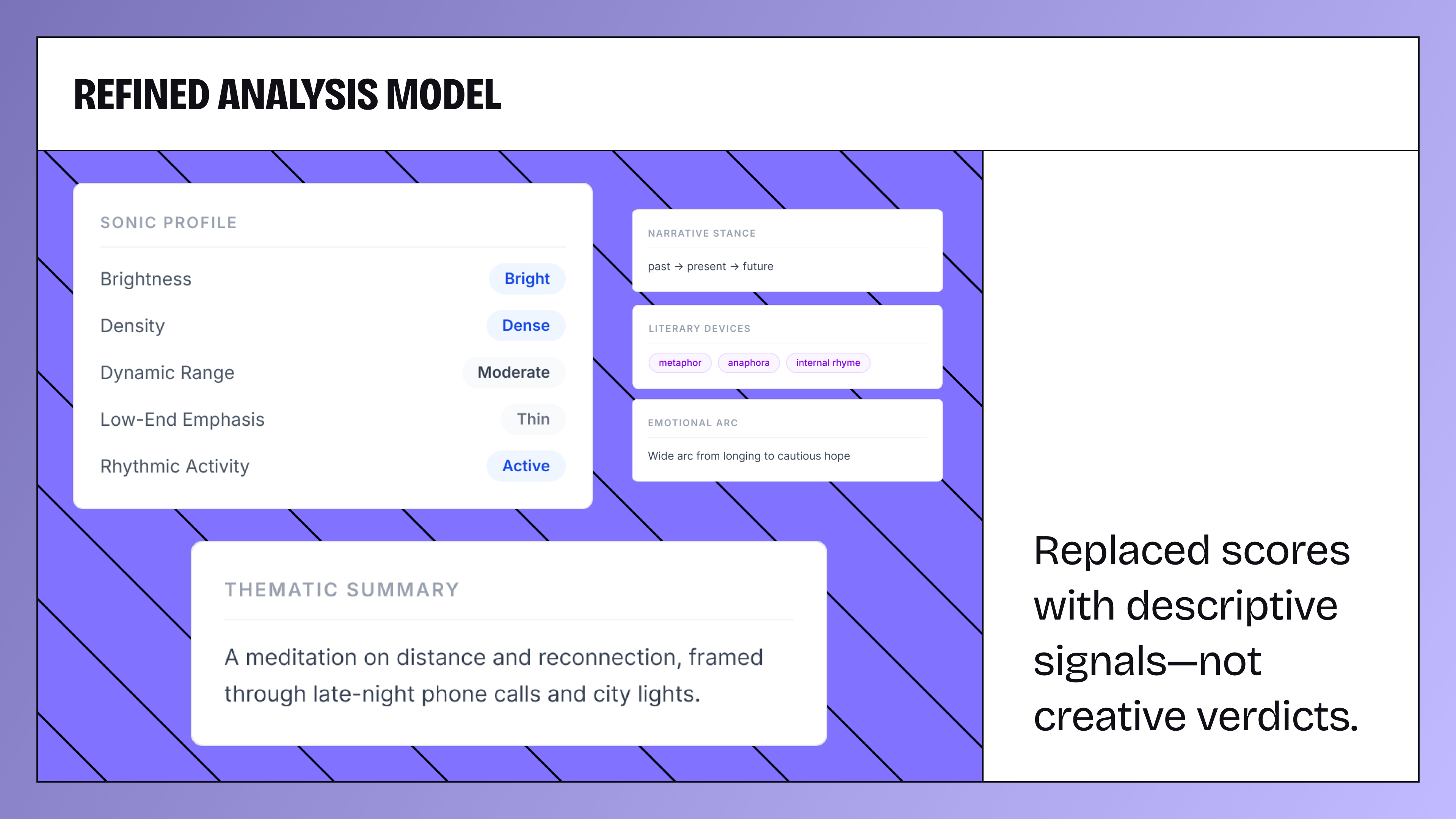
Refining AI from scoring to guidance
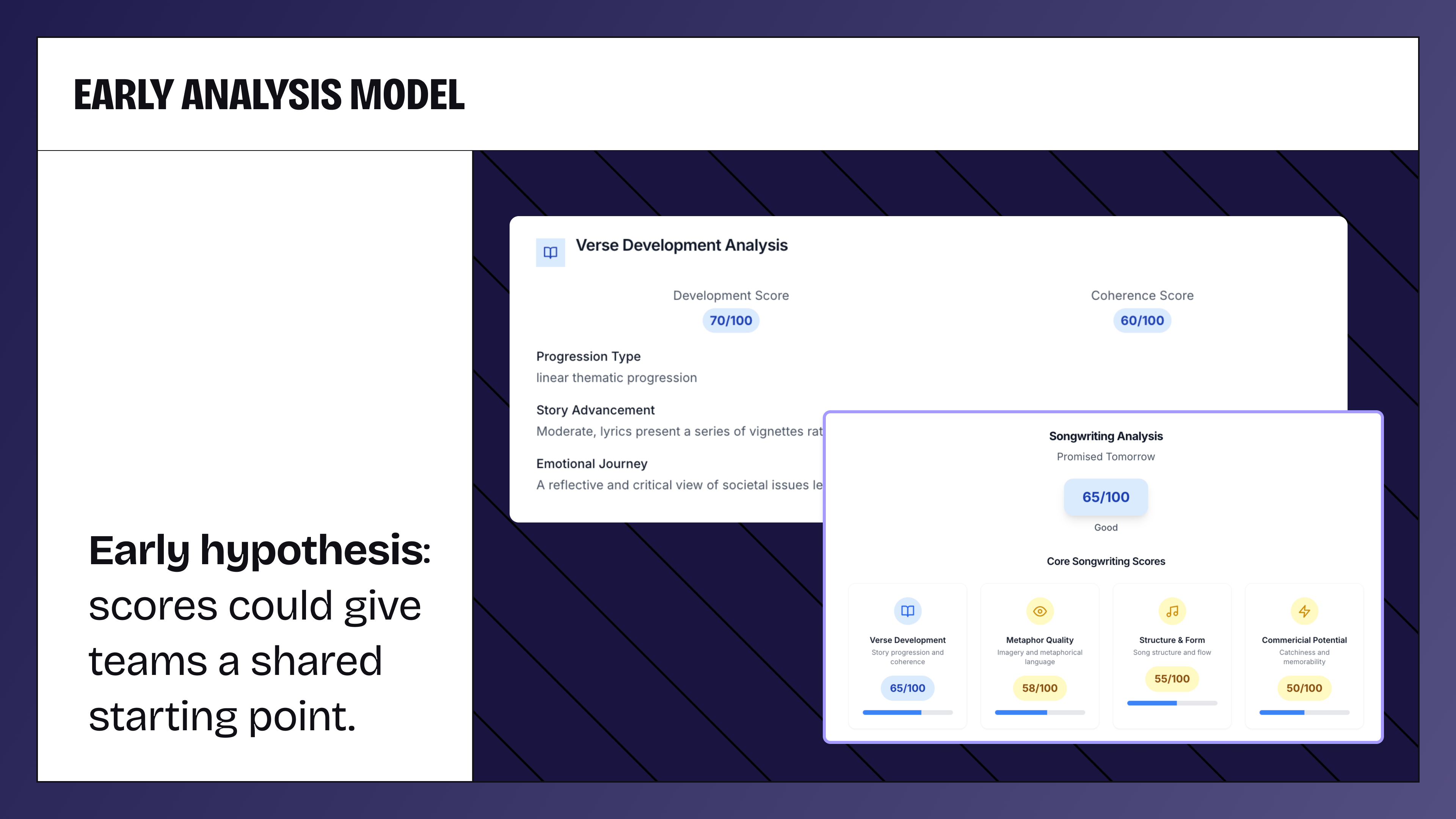
As I developed the experience, the score-led model exposed a tension. Numerical results were easy to scan, but they also suggested more objectivity than a creative assessment could honestly provide.
I began shifting the experience toward interpretable observations across sound, structure, cohesion, and lyrics. The system could help teams notice and discuss patterns without presenting its output as a final judgment.
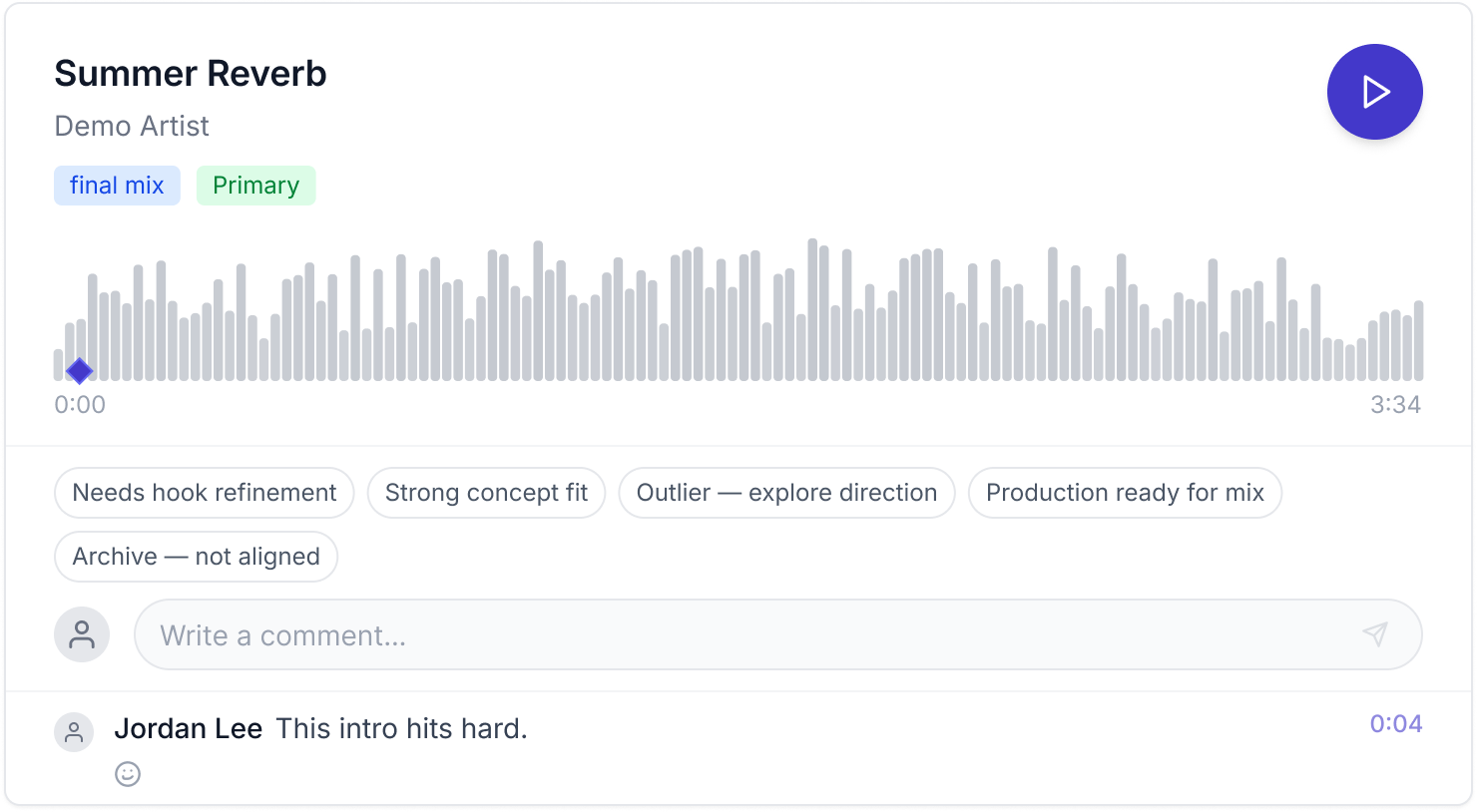
Keeping collaboration attached to the work
Feedback loses value when it becomes separated from the file or decision it describes.
Music Label OS began bringing tasks and discussions into the catalog so conversations could remain connected to a track, release, artist, or document.
This supports different team sizes without turning the product into a general-purpose messaging platform. A solo artist can use the structure as memory. A larger team can use the same model to preserve context and ownership across specialized roles.
Extending the workflow
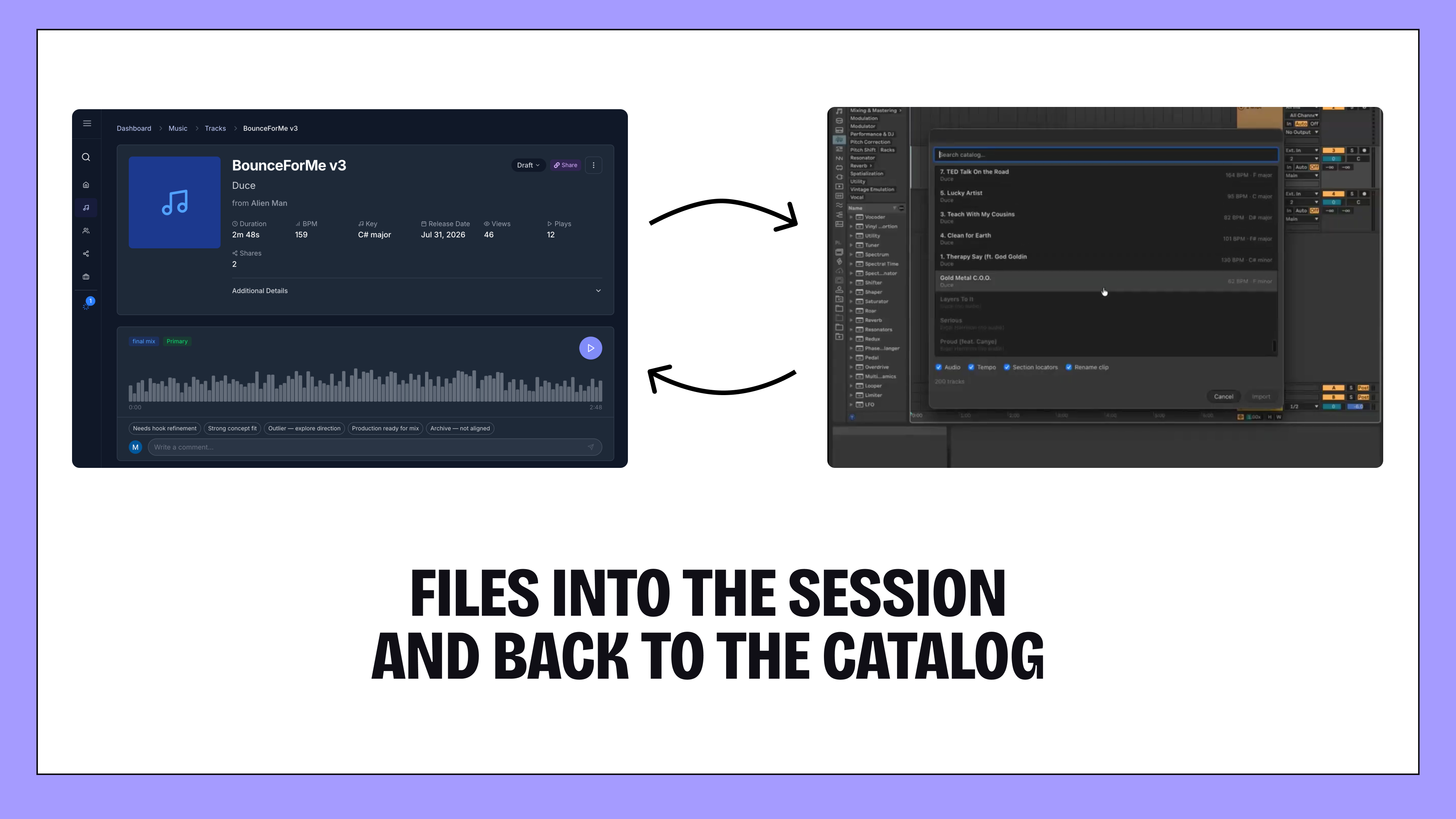
Once the catalog foundation was established, I explored how Music Label OS could connect with the tools musicians already use.
For an Ableton companion, I avoided recreating the entire platform inside the production environment. Instead, I focused on one workflow.
The companion imports catalog files from Music Label OS into Ableton, then exports stems, mixes, and new versions back to the correct catalog entry.
Outcome
Music Label OS grew from an internal workflow into a paid template and live multi-tenant product. The process required defining the system, testing its value, and refining features when they conflicted with creative judgment.
The work has produced:
- a multi-tenant catalog for independent music teams
- connected workflows for artists, albums, tracks, files, and credits
- external catalog matching and review
- analysis-assisted decision support
- tasks and discussions connected to catalog records
- an external paying pilot and recurring active use
- product analytics and operational systems supporting continued iteration
Next, I’m focused on making it easier for independent teams of different sizes to adopt—and eventually helping them prepare 1,000 releases without losing ownership of their work.